Interpreting for culturally diverse settings.1

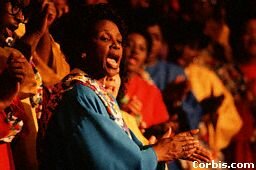
Cultural diversity recognizes that different communities have their own unique history, traditions, values, and perhaps an independent language. The perspectives of these different communities are seen to be equally valid. Ideally, a person would seek to become more aware of these different cultures, especially if the person interacts with members who identify with these communities. Interpreters regularly work with Deaf people who are at least bicultural, but some have yet a third culture that they identify with or at least are raised in, such as being Hispanic, Jewish or Gay.
The RID Code of Ethics, Tenet 4, says "Interpreters/transliterators shall accept assignments using discretion with regard to skill, setting, and the consumers involved." It's fine to know your limits, but Tenet 7 says, "Interpreters/transliterators shall strive to further knowledge and skills through participation in work-shops, professional meetings, interaction with professional colleagues, and reading of current literature in the field." Part of professional development is to expand your repertoire of possible settings and consumers, and one avenue for this is a multi-cultural education.
It's true that some multi-cultural Deaf people would prefer an in-group member to interpreter for an in-group event, such as religious services, ethnic gatherings, or rallies, but there are often not enough in-member interpreters to go around, and most consumers would be happy to see an out-member, who was educated in the in-group's ways, interpret for them. Should an interpreter try to look like an in-member signing or sound like an in-member speaking? Probably only someone raised in the culture can do this convincingly, but it is sometimes useful if you feel that it's an important part of the presenter's style and the event, and you can pull it off in a genuine way.
One can become knowledgeable about other cultures by reading books and articles, listening to speakers, watching programs and videotapes. Look for special events such as plays, lectures, ceremonies, and folkloric performances. Speak with in-members: Deaf, Hearing and interpreters. Learn customs and their meanings; become multi-cultural yourself. Perhaps you would enjoy learning more about your own ethnic or religious background, although you haven't explored it before, or just learn about it more deeply. Learn other languages, even if only superficially, and other sign languages too! To learn more, see Deaf cultures and Sign Languages of the world, Interpreting for German as a second language, and Interpreting for Spanish as a second language.
A person can be multicultural due to a number of factors: race, age, gender, language, history, sexual preference, physical difference, or belief. There has been a push in American society for pluralism, which means encouraging the different cultures here to assert themselves, rather than submerge beneath the myth of a mainstream culture. America used to be called a "melting pot" because people would stream here from other countries and forget their old ways in order to seek riches. Monetary riches are now seen by some as over glamorized and many people are going back to their old roots or planting new ones. As society tries to be more inclusive, interpreters need to be more aware of what factions are being included so as to be able to represent their viewpoint when interpreting it from ASL to English or vice versa, since there are multicultural Deaf people too.
Groups often do not have consensus about how to identify themselves, but we should learn the label that is accepted by most members and then be flexible. This is true in ASL as well as in English. I was interpreting for a Chinese Deaf person and used the indigenous sign for "China", that is the sign used in China by Deaf people, and the consumer objected because she was raised in China, Mao had been cruel to Deaf people, and the indigenous sign brought up bad memories. For more information on indigenous signs, see The use of indigenous signs by interpreters.
An example of how a second or third culture can impact an interpreting event is a speaker like Jesse Jackson. Although he is not a preacher, his speaking style is heavily influenced by the style of Black preachers. If the interpreter does not understand the religious imagery someone like Jackson employs, the message will be compromised.
Although there is no Black ASL in terms of grammar, there is a Black style of signing that is loose with hands held low and certain signs that are used by Black Deaf people that would not be understood by White Deaf people. An example is the 5 handshape drummed against the temple with the head lightly shaking which means "don't worry about it." The sign NEGRO is properly an N drawn across the nose (fingers pointing to the non-dominant side) and not rubbing down the nose. This sign should actually not be used even when the word "Negro" is said, because it is considered derogatory, but you should know the sign when you see it so that you can interpret what someone says. It's better to fingerspell N-E-G-R-O. The negative sign NIGGER looks like BORING but with an N handshape. Again, don't use it, but know what it means. Also don't correct Deaf people if you see them use it. It's another Deaf person place to do that, if they feel so. In a similar way, you could find signs that are to be avoided in a Jewish setting (G-D BOOK rather than JESUS BOOK), or a Lesbian/Gay setting (LESBIAN should tap the tip of the index finger against the chin, rather than the area between the finger and thumb.) Learn, seek out these settings, and then learn some more. The National Clearinghouse of Rehabilitation Training Materials has a "Multicultural Materials Catalog" at NCRTM's online catalog. Click on a Word or PDF format of it. Here are some resources to further your learning:
 Journals, newspapers, and newsletters
Mailing lists, chat sites, & news groups
 Books
BooksGay/Lesbian/Bi/Transgendered/Intersexed/Questioning
Member of a less represented religion
Physically challenged/ Disabled
GENERAL
 Grant, J. (1983). The bilingual hearing impaired: Teaching children and preparing teachers. The Bilingual Exceptional Child, 341-358.Grant, N. C. (1992). Needs assessment: Multicultural families with deaf/hard of hearing children. Unpublished research project. San Francisco State University: Department of Social Education.Mindess, A., T. K. Holcomb, D. Langholtz, and P. Moyers. (1999, July).Western Oregon University (n.d.)
This handbook offers examples of successful practices used by LaGuardia Community College's Program for Deaf Adults. It describes programs, practices and educational approaches to working with multicultural students who are deaf and hard of hearing. La Guardia Community College (NETAC). 1999. Free. (Classroom Access - FR, SI; Institutional Issues - IA)
Anderson, G.B.
 (1992). Personal perspectives on empowerment. Empowerment and black deaf persons. Washington, D.C.: College of Continuing Education, Gallaudet University. 139-146.(1994). Tools for a Wiser, Healthier Black Deaf Community. In M.D. Garretson (Ed.), Deafness: Life & Culture. Deaf American Monograph Series, Vol. 44, 1-4. Silver Spring, MD: National Association of the Deaf.& D. Watson (Eds.) The Black Deaf Experience: Excellence and Equity. Little Rock, AR: University of Arkansas Rehabilitation Research and Training Center for Persons Who are Deaf or Hard of Hearing, 29-38.Aramburo, A. J.
(1989). Sociolinguistic aspects of the Black Deaf community. In C. Lucas (Ed.), The Sociolinguistics of the Deaf Community, 103-119. San Diego, CA: Academic Press.(1992). Sociolinguistic aspects of the Black deaf community. In Conference Proceedings. Empowerment and Black deaf persons. Washington, DC: Gallaudet University.& McAllister, E. Interpreting for Southern Black Deaf. In M. L. McIntire (Ed.), Proceedings of the Ninth National Convention of the Registry of Interpreters for the Deaf. Silver Spring, M.D.: RID Publications, 107-110.Baer, A. M. , A. Okrent, and M. Rose. Noticing Variation in ASL: Metalinguistic Knowledge and Language Attitudes Across Racial and Regional Lines. In L. Byers and M. Rose (Eds.) (1996). Communication Forum. Gallaudet University School of Communication, - Publisher, 1-30.Bruce, J. (1993). A comparative study of back channeling signals between an African American Deaf speaker and African American and White Deaf speakers. Communication Forum. Publisher: William Moses, Student Forum, Vol. 2. Gallaudet Publications, 1-76.Cohen, O. (1993). Educational needs of African American and Hispanic deaf children and youth. In Christensen, K.M., & Delgado, G.L. (Eds.) Multicultural issues in deafness. New York: Longman Publishing.Empowerment and Black Deaf Persons. April 6 - 7, 1990. Bronx, New York. Conference Proceedings Paper. (Available from The College for Continuing Education, Gallaudet University Kellogg Conference Center, 175 pp., 6 X 9 in. Price: $20).Guggernhein, L. (1993). Ethnic variation in ASL: The signing of African Americans and how it is influenced by conversational topic. Communication Forum 2, 51-76.Hairston, E. & L. Smith. (1993).Jones, Phillip A. Issues involving Black interpreters and Black Deaf. In M.L. McIntire (Ed.), Proceedings of the Ninth National Convention of the Registry of Interpreters for the Deaf. Silver Spring, MD: RID Publications, 85-95.Moeletsi, Dunn, and Lindsay. The Deaf Community in the 21st Century: A Black Deaf Perspective. Deaf Studies V - Toward 2000 - Unity and Diversity. Conference Proceedings. College for Continuing Education. Gallaudet University, 121-128.Moore, Carl M. "Black Deaf Culture." National Conference on Black Deaf Experience: Excellence and Equity. Atlanta, Georgia March 14, 1992.Wright, M. H. (1999)
DiversityStore.com.Fong, T. P. and L. H. Shinagawa (eds). (September 21, 1999).Inada, L. F., et al. (August 1, 2000).Shankar, L. D. (ed) (January 1998).Yee, P. (June 1999).Zhou, M and J. V. Gatewood (eds). (May 2000)
Bar-Tzur, D.
Bar-Tzur, D.
AcademicInfo.com.Boswell, J. (July 1981)Conaway, F. & Sutter, S. C.Luczak, R.
(ed) (1993) Eyes of desire: A Deaf Gay & Lesbian reader.Alyson Publications. ISBN: 1555832040.
Marcus, E. (June 1999)
Blackwell, P.M., & Fischgrund, J.E. (1984). Issues in the development of culturally responsive programs for deaf students from non-English-speaking homes. In Delgado, G.L. (Ed.), The Hispanic deaf. Washington, DC: Gallaudet College Press.Cohen, O. (1993). Educational needs of African American and Hispanic deaf children and youth. In Christensen, K.M., & Delgado, G.L. (Eds.) Multicultural issues in deafness. New York: Longman Publishing.DiversityStore.com.Gerner de Garcia, B. (1993). Addressing the needs of Hispanic deaf children. In Christensen, K.M., & Delgado, G.L. (Eds.) Multicultural issues in deafness. New York: Longman Publishing.Jackson-Maldonado, D. (1993). Mexico and the United States: A cross-cultural perspective on the education of deaf children. In Christensen, K.M., & Delgado, G.L. (Eds.) Multicultural issues in deafness. New York: Longman Publishing.Lerman, A. (1984). Survey of Hispanic hearing-impaired students and their families in New York city. In Delgado, G.L. (Ed.) The Hispanic deaf. Washington, DC: Gallaudet College Press.
Bar-Tzur, D.
Bar-Tzur, D.
Bar-Tzur, D. (2000)
Cheng, L.-R. R. (ed). (August 1998).DiversityStore.com.Leonard, G. (ed). (October 1, 1998).Moss, J. and G. Wilson (September 1993).Revilla, L. A. et al. (February 1994).Wu, D. T. L. (October 1997).
Ablon, J. (May 1988)Fries, K (ed). (October 1997)Herr, S. S. and G. Weber (eds). (May 1999)Karp, G. and L. Lamb (eds). (July 15, 1999)Mannix, D. P. (February 2000)
Breindel, T. J. (April 2000).Daly, M. (March 1985).DiversityStore.com.Olasky, M. (September 1992).Ryan, M. J. (ed) and P. Wynne. (October 1998).Skog, S, (ed), (December 1995).
CDs, DVDs, & Videotapes

Gay/Lesbian/Bi/Transgendered/Intersexed/Queer
Member of a less represented religion
Physically challenged/ Disabled
GENERAL
Bar-Tzur, D.Morris, P. (2001).
DiversityStore.com.
Bar-Tzur, D.
Bar-Tzur, D.
DiversityStore.com.
Bar-Tzur, D.
Bar-Tzur, D.Native American
Bar-Tzur, D.
DiversityStore.com.
Journals, newspapers and newsletters

Gay/Lesbian/Bi/Transgendered/Intersexed/Queer
Member of a less represented religion
Physically challenged/ Disabled
Mailing lists are group discussions by e-mail, where all submissions and responses of a group are sent to a central location and then back to all members so that everyone's comments on a focus topic (sometimes it loses its focus, sigh) can be read. GENERAL
Braden, J. P. (1989). Fact or artifact? An empirical test of Spearman's hypothesis. Intelligence, 13 (2), 149 155.Cohen, 0. P.
(1990). Deaf children from ethnic, linguistic and racial minority backgrounds: An overview. American Annals of the Deaf, 135 (2), 67-93.(1991). At-risk deaf adolescents.Volta Review, 93 (5), 57-72.Davidson, A., & Nuru, J. (1990-1991, Winter). Creating a culturally diverse community: Academic administrators as agents for change. Gallaudet Today, 21(2), 18-23.Delgado, G. L.
(1980). International baseline data on hearing-impaired children with non-native home languages. International Congress on Education of the Deaf, 1980, Hamburg, Germany, 1, 84-94.
(1981). Hearing-impaired children from non-native language homes. American Annals of the Deaf, 121 (2), 118-121.Henley, D. (1987). An art therapy program for hearing-impaired children with special needs. American Journal of Art Therapy, 25(3), 81-89.Janesick, V. J. (1990). Bilingual multicultural education and the deaf. Issues and possibilities. Journal of Educational Issues of Language Minority Students 7, 99-109.Johnstone, M. (1990, Winter).
Small world: MSSD takes bold measures to eliminate racial, cultural, and gender biases on campus. Gallaudet Today, 21(2), 24-31.Making an impact: Ernest Hairston influences the lives of deaf people nationwide. Gallaudet Today, 21(2), 44-48.Jones, Y. E. (1985). The double-whammy. Emotional First Aid: A Journal of Crisis Intervention, 2(4), 39-41.Info to go, Gallaudet University.Kasen, S., Ouellette, R., & Cohen, P. (1990). Mainstreaming and postsecondary educational and employment status of a rubella cohort. American Annals of the Deaf 135 (l), 22-26.Lane, H. (1988). Is there a "psychology of the deaf" Exceptional Children, 55(l), 7-19.Lederberg, A. R., & Others. (1986). Ethnic, gender, and age preferences among deaf and hearing preschool peers. Child Development, 57(2), 375-386.MacNeil, B. (1990). Educational needs for multicultural hearing-impaired students in the public school system. American Annals of the Deaf, 135 (2), 75-82.Moore, N. (1990, Winter). The right stuff. A sampling of minority deaf people who are making a difference. Gallaudet Today, 3(2), pp. 14-17.Robson, P. 1. (1988). Multi-ethnic issues in the education of the hearing-impaired population of an inner city area. International Congress on Education of the Deaf, 1988, 4, 2070-2075.Roth, A. (2006, June). Assigning interpreters in our multicultural cosmos. Views, 23, 6. 31, 33. The challenge of working incommunities which are not affected by English-Anglo cultural and hearing communities.Townsley, L. (1985). Latin as a vocabulary builder for hearing-impaired and second-language students of English. Teaching English to Deaf and Second-Language Students, 3(1), 4-8.Wolk, S., & Schildroth, A. (1985). A longitudinal study of deaf students' use of an associational strategy on a reading,, comprehension test. Journal of Research in Reading, 8(2), 82-93.
Andersen, G. B.
The Eyes of Texas Are Upon. Jean Andrews and Lamar University. The Deaf Texan, January/February 1996: 4.The Texas Black Deaf Heritage. The Deaf Texan, January/February 1996: 3-4.& C. A. Grace, (1991). Black deaf adolescents: An underserved population. In O. Cohen & G. Long (Eds.). Adolescence and Deafness. Washington, DC: The Volta Review, 93 (5), 73-86.Aramburo, A. J. Interpreting Within the African-American Deaf Community. RID Views, 12, Issue 6 (June 1993).Azodeh, E. A Sign of African-American Pride. Silent News, 26, (3), March 1994: 3.Cartwright, B. (May 2004). Best practices. Views, 21, 5, 1. Excerpt: I recently team interpreted an event for a predominantly African American audience. Afterwards, people from the audience who didn't know either of us came up and complimented my African American partner profusely and completely ignored me. The kudos are not the point. I wanted to take this job, but now I'm not so sure I should have. Do you have any insight?Fischgrund, J., Cohen, O., & Clarkson, R. (1987). Hearing impaired children in black and Hispanic families. Volta Review, 89 (5), 59-67.Marbella, Jean. For Sisters, Interpreting success has become a way of life. Silent News, January 1994.Martin, J. E. and H. T. Prickett. Black Deaf Children: Culture and Education. Perspectives in Education and Deafness, 10, 4, March/April 1992.Peery, P. Interpreting: The personal, professional and social contexts. RID Views June 1993.Seabon, P. "The Black Deaf Experience." NTID Focus, Fall 1992: 12-15.Valentine, V. (1995). Listening to the deaf Blacks: they want community access and acceptance. Emerge,7, 56(6).Washington, D. A Minority student in an Interpreter Training Program. RID Views June 1993.
Bar-Tzur, D.
Bar-Tzur, D.
Subscribe toLesbian.com.Swartz, D. B. (1993).
Bar-Tzur, D.
Bar-Tzur, D.
Bar-Tzur, D. (2000)Native American
Bar-Tzur, D.
Scott, K. K. (May 1998)
Mailing lists, chat sites, & news groups

Gay/Lesbian/Bi/Transgendered/Intersexed/Queer
Member of a less represented religion
Physically challenged/ Disabled
African American/Black
ABSLST-L@CMUVM.CSV.CMICH.EDU - Association of Black Sociologists. To subscribe, send mail toBar-Tzur, D.BGPSA@LISTSERV.UTK.EDU - Black Graduate and Professional Student Association. To subscribe, send mail toBLACK-IP@LISTSERV.TEMPLE.EDU - Black Information Professionals' Network. To subscribe, send mail toBLACKSTU@LISTSERV.RICE.EDU - Black Student Association mailing list. To subscribe, send mail toMUNIRAH@MAELSTROM.STJOHNS.EDU - The MUNIRAH Chronicle of Black Historical Events & Facts. To subscribe, send mail toNBIC@LISTSERV.SYR.EDU - (National Black Intercollegiate Council). To subscribe, send mail to
AAA-GEN-MEM-L@LISTSERV.ND.EDU - Asian American Association. To subscribe, send mail toASPIRE-L@LISTSERV.INDIANA.EDU - Linkages for Students from Asian Nations. To subscribe, send mail toBar-Tzur, D.CAAS@LISTSERV.UIC.EDU - Coalition for Asian American Studies. To subscribe, send mail toH-ASIA@H-NET.MSU.EDU - H-Net list for Asian History and Culture. To subscribe, send mail to
Bar-Tzur, D.
Bar-Tzur, D.
Bar-Tzur, D.HGSATAMU@LISTSERV.TAMU.EDU - Texas A&M Hispanic Graduate Student Association. To subscribe, send mail toHISPPHIL@LISTSERV.SYR.EDU - Hispanics-Latinos in Philosophy. To subscribe, send mail toNIH-HEO@LIST.NIH.GOV - Hispanic Employee Organization. To subscribe, send mail toSALSA@LIST.ACAST.NOVA.EDU - Organization to promote Hispanic Heritage. To subscribe, send mail to
Bar-Tzur, D.
Muslim
Bar-Tzur, D.
APF-L@BNA.COM - BNA's Asian Pacific Focus. To subscribe, send mail toAPSDC-L@LISTSERV.AMERICAN.EDU - Asian/Pacific Student Forum. To subscribe, send mail toIRASIA-L@WEBBER.OUP.CO.UK - Oxford Journals: International Relations of the Asia-Pacific. To subscribe, send mail toMAASU-L@TC.UMN.EDU - Asian/Pacific American Community List. To subscribe, send mail toTAPAI-L@LISTSERV.TEMPLE.EDU - Temple Asian Pacific American Issues. To subscribe, send mail to
FAP-L@SCAS.SAGEPUB.CO.UK - Feminism & Psychology To subscribe, send mail toFEMRHET-L@TC.UMN.EDU - femrhet-l: Discussion of the planning of the Feminism(s) and Rhetoric(s) Conference To subscribe, send mail toGEOGFEM@LSV.UKY.EDU - Discussion list for Feminism in Geography To subscribe, send mail to Organizations
Gay/Lesbian/Bi/Transgendered/Intersexed/Queer
Member of a less represented religion
Physically challenged/ Disabled
GENERAL
Bar-Tzur, D.
Bar-Tzur, D.
Bar-Tzur, D.
Web sites

Gay/Lesbian/Bi/Transgendered/Intersexed/Queer
Member of a less represented religion
Physically challenged/ Disabled
GENERAL
ASLinfo.com.Bar-Tzur, D.Griffin, S.Terrell, B. Y. & Hale, J. E. (1982, 5-8 January).
Bar-Tzur, D.Cobbs, J. T.
Bar-Tzur, D.
Bar-Tzur, D.
Bar-Tzur, D.Greenblatt, E.Halsall, P. (1997-1998) A video of Raymond Luczak signing in ASL with subtitles added... talking about book Eyes of Desire - A Deaf GLBT Reader.
About.comBar-Tzur, D.
Interpreting for foreign language courses: A case study with Spanish.This page has links to websites in and about Spanish, as well as Hispanic Deaf sites.
Sign Languages and Deaf cultures of the world.See any Hispanic countries of interest that are listed there.
DeafTODAY. (2004, October 19).
Bar-Tzur, D.
Bar-Tzur, D.Native American
Bar-Tzur, D.
Bar-Tzur, D.Glielmi, G. & Long, B. (1999, December 14).Tonella. K.
